
Russia faces a choice regarding its future strategy in the war against Ukraine. Experts are analyzing four scenarios, ranging from a frozen front to an open conflict with NATO countries.
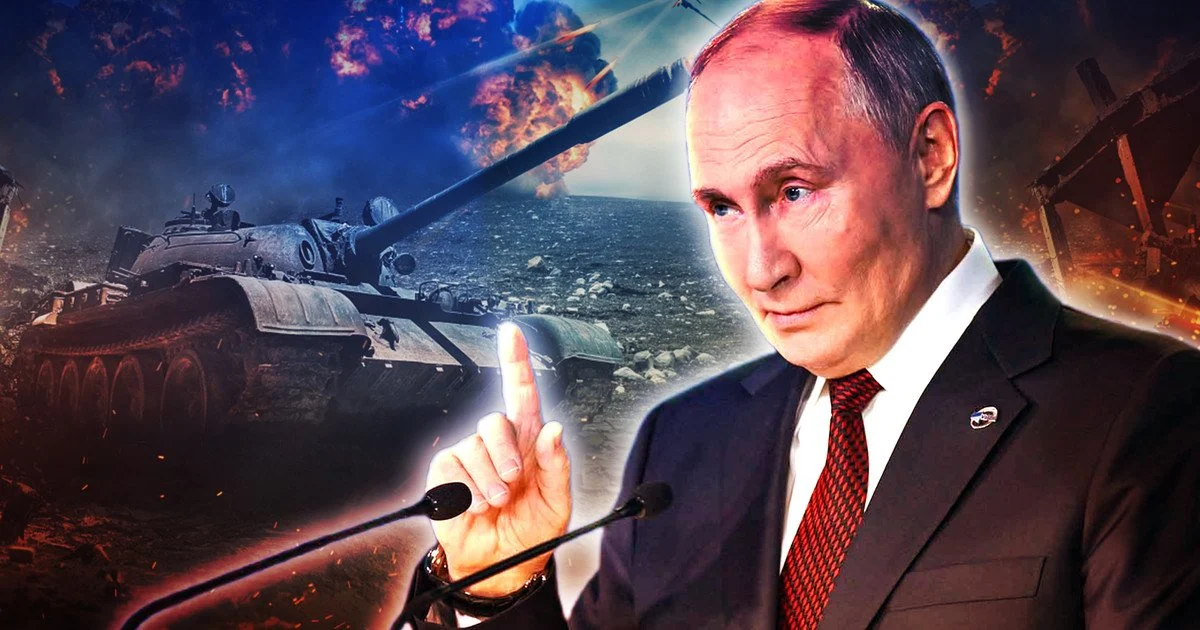
President of Russia Vladimir Putin and the war in Ukraine / © TSN
Danish military analyst Anders Nielsen has identified four key scenarios for the war’s development in Ukraine. These were evaluated by lecturer Valeriy Pekar, who considers escalation towards NATO countries the most probable outcome.
The lecturer from the Kyiv-Mohyla Business School and the Ukrainian Catholic University School of Business shared this opinion on his Facebook page.
Pekar reported that Nielsen outlined four potential scenarios for the further development of the current situation.
A Genuine Truce
Advantages for the Russian regime: the opportunity to stabilize the economy and reduce social tension. Disadvantages for the Russian regime: the de facto acknowledgment of its inability to capture “its” territories, as well as the return of “SVO veterans.”
Freezing the Front Line with Continued Warfare
Advantages for the Russian regime: maintaining the stability of power and a chance for victory through the gradual exhaustion of Ukraine. Disadvantages: deepening economic crisis and related problems.
Full-Scale Mobilization in the Russian Federation
Advantages for the Russian regime: the possibility to increase pressure and enhance chances of victory. Disadvantages: the threat of economic collapse, growing public discontent, and the likelihood of a rift among elites.
Attack on NATO Countries
Advantages for the Russian regime: an attempt to intimidate European countries with the aim of weakening support for Ukraine. Disadvantages: the risk of a harsh reaction from Europe.
“Technically, all four scenarios are possible. The regime has sufficient resources for mobilization. The army has enough resources to attack either the Baltic countries or Poland (with or without the use of ground troops),” believes the lecturer.
According to Nielsen, the most logical option appears to be freezing the front with the subsequent continuation of the war.
At the same time, Pekar noted that the logic of Russian President Vladimir Putin differs from the military analyst’s approach. Back in January, the lecturer analyzed the dictator’s actions, describing them as a logic of continuous escalation, which he termed “dominating the table.”
“Personally, I consider escalation towards NATO countries the most probable scenario, I’ve written about this many times in both Ukrainian and Polish press. The risk is high, but if successful, it allows Russia to immediately achieve the strategic goals of the war: take the European Union out of play, lift sanctions, reclaim frozen assets, and halt support for Ukraine (without European support, Ukraine won’t last long),” Pekar expressed his opinion.
Furthermore, he pointed out that the US is unlikely to side with Europe, and China might gain its own benefits from such a development. However, if Europe is prepared for such a scenario and strengthens military integration with Ukraine, the situation for Russia could quickly become critical. This approach, according to the author’s assessment, is characteristic of Putin: betting on the most risky option with the greatest increase in stakes and potentially the biggest win if successful.
“At the same time, mobilization should not be discounted either, and this means that Ukraine as a whole, and each of us individually, should consider what to do in this scenario,” the lecturer concluded.
As a reminder, Pekar previously expressed the view that global strategies in the war have not changed since autumn: Russia continues to exert pressure, Ukraine focuses on neutralizing the enemy and striking the Russian budget, Europe is increasing its own production, the US seeks to distance itself, and China is waiting for its opponents to weaken. According to the expert, Putin will not stop the war as long as he has resources, so Russia will fight until its money runs out. Despite the economic downturn, internal revolts in the aggressor country are unlikely, and real changes are only possible through a split among the elites. For Ukraine, the main risks are currently internal, making the preservation of internal resilience a key task, as European support is sufficient to continue the fight.
Comments Sort: New Old Popular Send