

August has arrived amidst financial anticipation, yet experts are already painting starkly contrasting scenarios for the autumn. Whom should one trust: the optimists or the pessimists? This is explored in the TSNS.ua review.
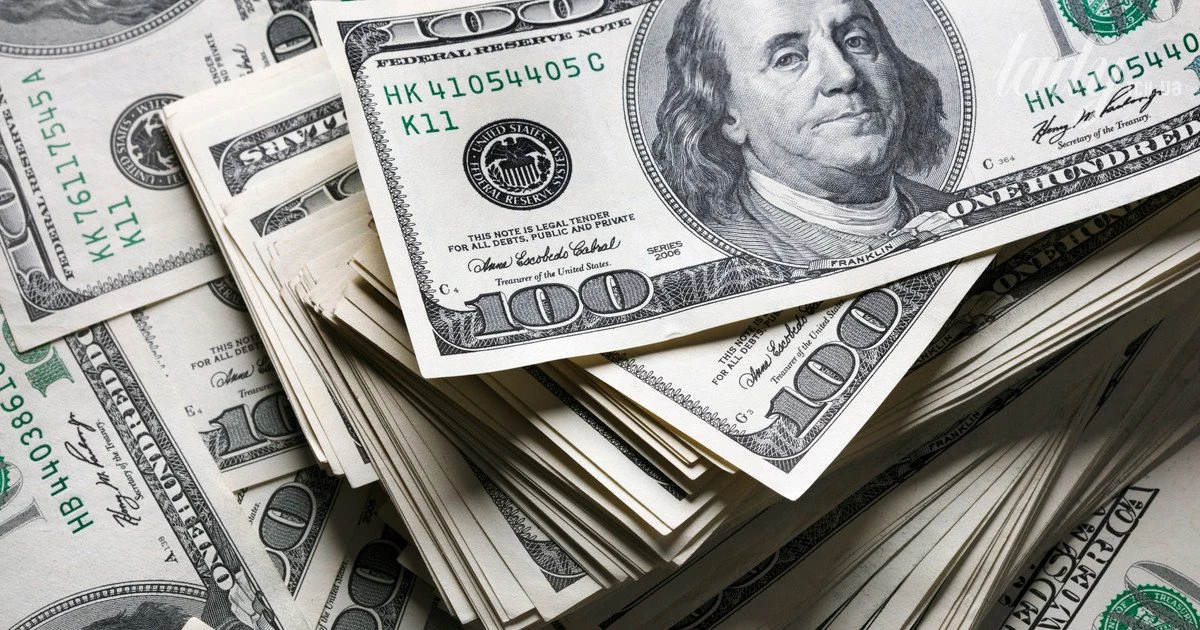
Exchange rate in Ukraine / © Credits
Contents
- What is the cost of the dollar and euro in exchange offices
- What to expect from the currency exchange rate in Ukraine
- To sell or buy currency
A rate of 45 hryvnias per dollar and 52 hryvnias per euro – this is the current reality for Ukrainians. How long will this hryvnia exchange rate persist amidst a noticeable decline in exports due to the blockade of our Black Sea ports, the increase in business activity starting in September, and other economic and military factors? Also, what is more advantageous now: the dollar, the euro, or are there other options? Read this analytical project by TSNS.ua.
You will also learn:
– what is happening in the currency market;
– what to expect from the exchange rate from August 16th to 31st;
– whether to sell or buy cash currency.
Our experts include: Oleg Pendzyn, expert of the Economic Discussion Club; Andriy Zablotskyi, head of the Secretariat of the Council of Entrepreneurs under the Cabinet of Ministers, economist; and Andriy Shevchyshyn, financial analyst, member of the Ukrainian Society of Financial Analysts.
What is the cost of the dollar and euro in exchange offices
According to specialized websites finance.ua and minfin.com.ua, the cash dollar in the first half of August remained in a so-called sideways trend. That is, it fluctuated within a narrow corridor without a clear directional change in rate. The selling rate varied up and down from UAH 44.90 to 45.08 per dollar, and the buying rate ranged from UAH 44.40 to 44.55 per dollar. As of Saturday, August 15th, one dollar cost an average of UAH 44.95 for selling and UAH 44.45 for buying.
The highest selling price for the dollar on August 15th was UAH 45.10, and the lowest was UAH 44.82 per dollar. The maximum buying rate was UAH 44.65 per dollar.
Conversely, the cash euro has been slowly appreciating. Over the two weeks of August, its selling rate increased from UAH 51.63 to 52.03 per euro (+40 kopecks), and the buying rate rose from UAH 51 to 51.45 per euro (+45 kopecks).
The highest selling price for the euro on August 15th was UAH 52.30, and the lowest was UAH 51.77. The maximum buying rate was UAH 51.70 per euro.
From August 1st to 15th, the National Bank maintained the official hryvnia exchange rate against the dollar within the range of UAH 44.64–44.87. On August 16th, the rate was UAH 44.70 per dollar. In total, this represents a +1 kopeck change over 15 days, indicating a virtually sideways trend.
The official euro exchange rate increased by 28 kopecks from August 1st to 15th, from UAH 51.27 to 51.55 per euro. However, at its peak, the euro was valued at UAH 51.78 (on August 11th).
The dollar/euro ratio in August increased from 1.14 to 1.15 dollars per euro.
Andriy Zablotskyi explained that in the first half of August, the National Bank continued to keep the dollar rate below 45 hryvnias by utilizing its gold and foreign exchange reserves, which it sold on the interbank market to meet currency demand.
“During the first working week of August, from the 3rd to the 7th, the NBU sold over $1 billion. Data for the second week is not yet finalized, but it is estimated to be around $1 billion as well,” Zablotskyi specified. “This policy of the regulator has restrained the exchange rate in the cash market as well; the minor daily fluctuations in the rate were caused by changes in supply and demand.”
What to expect from the currency exchange rate in Ukraine
Andriy Zablotskyi described the current exchange rate situation as a “postponed devaluation of the hryvnia.”
“The economic situation in the country is complex. According to official statistics, Ukrainian exports through Black Sea ports fell by 70% in August compared to the same period last year, which is unfortunately a very significant decline,” analyzes Andriy Zablotskyi. “An increase in demand for currency will manifest itself, if not at the end of August, then at the beginning of September. The National Bank continues its policy of managed devaluation, but the comfortable rate of around UAH 45/dollar, which we are currently observing, will not last long; this is the calm before the storm. I expect the exchange rate corridor for the dollar on the interbank market, due to the currently low business season, to be within UAH 44.8–45.3 per dollar, with the cash market being 15–20 kopecks higher accordingly. This status quo will persist for a maximum of until the end of August.”
According to Andriy Shevchyshyn, the following factors will simultaneously affect the hryvnia against the dollar in the second half of August:
-
the consequences of the port blockade, as the time lag between the cessation of export goods shipments and the reduction in foreign exchange earnings is 2–4 weeks;
– an increase in import volumes: purchasing gas for storage, businesses preparing for the autumn season, restocking after shelling;
— the population, after the holiday season, is shifting towards accumulating currency.
As a result, the expert believes the following scenarios for the hryvnia exchange rate change are possible by the end of August.
“The baseline scenario (70% probability): a shift to a new exchange rate zone. The NBU will not be able to reduce the currency deficit at the current pace,” predicts Andriy Shevchyshyn. “The interbank rate will be in the corridor of UAH 45–46 per dollar, cash dollar will reach UAH 45.2–46, and cash euro: UAH 50.5–52. The optimistic scenario (10%): recovery of dollar/euro pair quotes above 1.17, de-escalation around Iran, oil below $80 per barrel. Plus, successful reorientation of export flows through land routes and European ports, or mutual agreements on grain corridors. The dollar will remain within UAH 44.75–45.25, and the euro will return to UAH 52–52.5. The negative scenario (20%): prolonged port blockade, lack of prospects for de-escalation by the end of September, oil above $95 per barrel. The NBU may allow the dollar to reach UAH 46–46.5.”
Oleg Pendzyn expressed a non-trivial view of Ukraine’s macroeconomic situation, which is already influencing and will continue to influence the hryvnia exchange rate in the medium term. In his opinion, Ukraine’s macroeconomics is now directly linked to macro policy and a war that seems endless.
“The main factor that will influence the hryvnia exchange rate in the near future is the volume of foreign financial assistance to Ukraine,” says Oleg Pendzyn. “Unfortunately, I must state that Western countries are gradually viewing Ukraine as a ‘frontier country,’ meaning a buffer protecting them from Russian aggression. It is understood that this protection comes at a cost, but it is more advantageous for the West than fighting themselves. Therefore, by and large, the state of Ukraine’s economy during the war is of secondary importance. We will receive financial assistance for as long as it is needed. As a result, in my assessment, the National Bank will accumulate up to $80 billion in reserves by the end of the year (currently, NBU reserves are around $50 billion – Author’s note), from which it can calmly spend $10 billion to support the hryvnia exchange rate within the corridor of UAH 45–46 per dollar. Regarding the second half of August, the rate will remain at the current level: official below UAH 45, interbank – around UAH 45, cash (selling) – UAH 45–45.2 per dollar.”
To sell or buy currency
Andriy Zablotskyi believes that now is a favorable time to increase the foreign currency component of an investment portfolio.
“While hryvnia government bonds (OVDP) work ideally for capital growth, and hryvnia deposits serve as a tool for quick liquidity, cash dollars are a fundamental anchor for the safety of savings. This makes buying currency now a safe long-term move, although it does not yield high interest. It is advisable to buy euros now if future expenses (travel, education, purchases) are planned specifically in European currency,” explained Andriy Zablotskyi.
Andriy Shevchyshyn shares the same opinion.
“The situation is shaping up to be so complex that buying currency should be considered not so much for profit as for insurance, so I am in favor of buying,” he argued.
Oleg Pendzyn, on the contrary, advises continuing to use hryvnia investment instruments for maximum profit.
“Based on my understanding of the macroeconomic, macro-political, and financial situation in Ukraine, one should not fear a collapse of the hryvnia and seek refuge in foreign currency from the depreciation of savings,” believes Oleg Pendzyn. “However, one should not sell existing cash currency; it is better to invest in hryvnia instruments using new inflows.”
The expert calculated: those who purchased OVDP for UAH 1000 monthly from January 2025 to July 2026 (1 year and 7 months) with an average yield of 15% earned UAH 2137. That is, they gradually invested UAH 19,000 and received UAH 20,375. Similar investments in cash dollars over the year and 7 months would have yielded UAH 755 in income during this period, which is 3.15 times less. The hryvnia depreciated by 6.7% from January 2025 to August of the current year at the official rate, and the break-even point, where monthly dollar purchases overtake monthly OVDP purchases, is possible at an exchange rate of UAH 54 per dollar.
Oleg Pendzyn’s conclusion: regular currency purchases protect against sudden crises but lose out to hryvnia instruments if the NBU conducts devaluation smoothly and in a controlled manner, as has been the case for the last year and a half.
Comments Sort: New Old Popular Submit