

Modern computer simulations have led scientists to question knowledge taught in schools for decades and suspect the existence of extreme environments within the most distant planets.
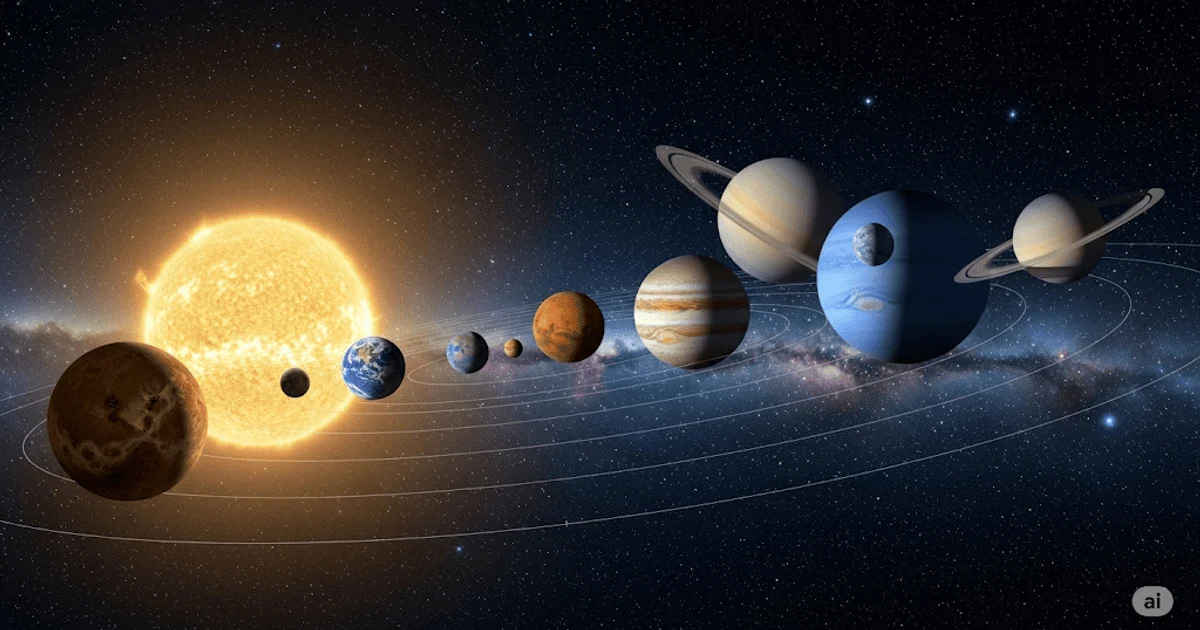
Two ice giants of the Solar System turned out to be “hot stuff” inside
Uranus and Neptune might not be ice giants as scientists have believed for many decades. Instead of frozen water and ammonia, their interiors likely hide gigantic oceans of superheated magma.
This is reported by the publication Gizmodo.
Outdated Theories and New Research
Most current knowledge about these two most distant planets is based solely on a single flyby by the Voyager 2 spacecraft in the eighties. For a long time, the hypothesis prevailed that both worlds possess a dense atmosphere of hydrogen and helium. Beneath it, a giant mantle of ice and a solid rocky core were thought to be hidden.
However, new modeling of the internal processes of these planets completely shatters the classic three-layer concept. Researchers have drawn attention to objects in the Kuiper Belt, where Uranus and Neptune once formed. These cosmic bodies predominantly consist of rock, not ice, which casts doubt on the traditional theory.
Magma Oceans Instead of Ice
The most probable model suggests that the planets have a well-mixed magma ocean with dissolved hydrogen at the bottom. Under extremely high pressure, gaseous hydrogen can dissolve in magma, forming a homogeneous liquid. This mixture perfectly explains the unique density of these planets, which was previously mistakenly attributed to a large amount of ice.
Scientists now propose reclassifying these worlds from “ice giants” to “magma ocean giants.” Although official terminology changes will require considerable time and further discussions within the scientific community. Nevertheless, these discoveries will now help astronomers better understand the structure of mysterious exoplanets in the Milky Way.
We remind you that scientists have discovered a mysterious planet 50 light-years away from us. Due to tidal locking, one side of the exoplanet is always illuminated by light, while the other is in eternal darkness.
Comments Sort by: New Old Popular Submit