

A well-designed cellar is a real lifesaver during power outages. Underground conditions can be created to store food for many months without using any electricity.
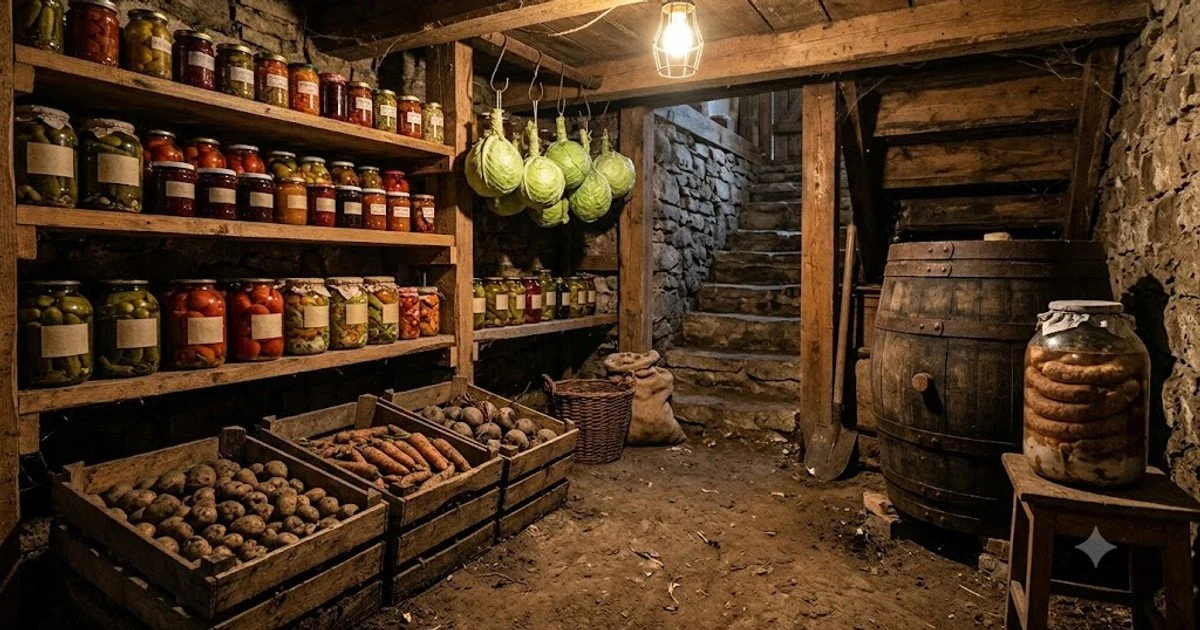
Food can be stored in a cellar without electricity / © Photo from open sources
American gardening experts have shared effective tips for the proper design of underground storage for long-term preservation of the autumn harvest. The special construction of such a facility allows for maintaining a stable microclimate to keep fruits and vegetables fresh from several weeks to an entire winter.
This is reported by Martha Stewart.
Location and Basic Construction
Most traditional cellars are built fully or partially underground, as the surrounding soil naturally helps regulate temperature and humidity within the space. Specialists recommend choosing a well-drained area for construction, located as close as possible to the residential building for convenient access in winter.
“Digging into a hillside means you’ll have to move much less earth,” notes farmer Greg Reynolds.
For reliable protection against freezing, the roof of such an underground storage must be covered with a layer of soil from 60 to 90 centimeters thick. This covering provides ideal insulation against sharp seasonal temperature fluctuations and limits the ingress of excessive heat into the premises from the outside.
Temperature Control
One of the most crucial elements for the successful functioning of a cellar is maintaining the correct temperature range, which should fluctuate between 1 and 5 degrees Celsius. In cold climates, ventilation openings must be carefully monitored to close them promptly and prevent the stored produce from freezing.
Conversely, in excessively hot regions, constructing a traditional cellar may prove impractical, as the natural temperature of the soil itself will remain too high for long-term harvest storage. Therefore, success largely depends on thoughtful design and proper insulation, rather than futile attempts at mechanically cooling the underground space.
Humidity, Ventilation, and Lighting
To prevent fruits from shriveling and losing moisture, the humidity level in the room should be between 85-95%. An open earth or gravel floor allows moisture to move freely from the soil into the air, and if necessary in a dry climate, the surface can be additionally moistened with water.
“We store onions and garlic on the upper shelves, and place potatoes and other root vegetables closer to ground level, where it’s cooler and more humid,” advises expert Laurie Neverman.
In addition to humidity, the storage requires proper air circulation to remove excess heat and dangerous ethylene gas, which is released during fruit ripening. Specialists recommend installing two ventilation openings, protected by mesh against rodents: a lower intake vent for drawing in cool outdoor air and an upper exhaust vent for expelling warm air.
As for lighting, the cellar should be kept in complete darkness, with lights only turned on when inside. Modern LED lamps are the best choice, as they emit minimal heat, consume little electricity, and provide adequate illumination for safe inspection of supplies.
Recall that many people automatically store eggs in the special tray on the refrigerator door after purchasing them. However, food safety experts warn that such storage can reduce the shelf life of eggs and affect their quality.
Comments Sort by: New Old Popular Send