

A seemingly clean t-shirt after washing may have a white residue and a strong odor, all due to an excessive amount of detergent.
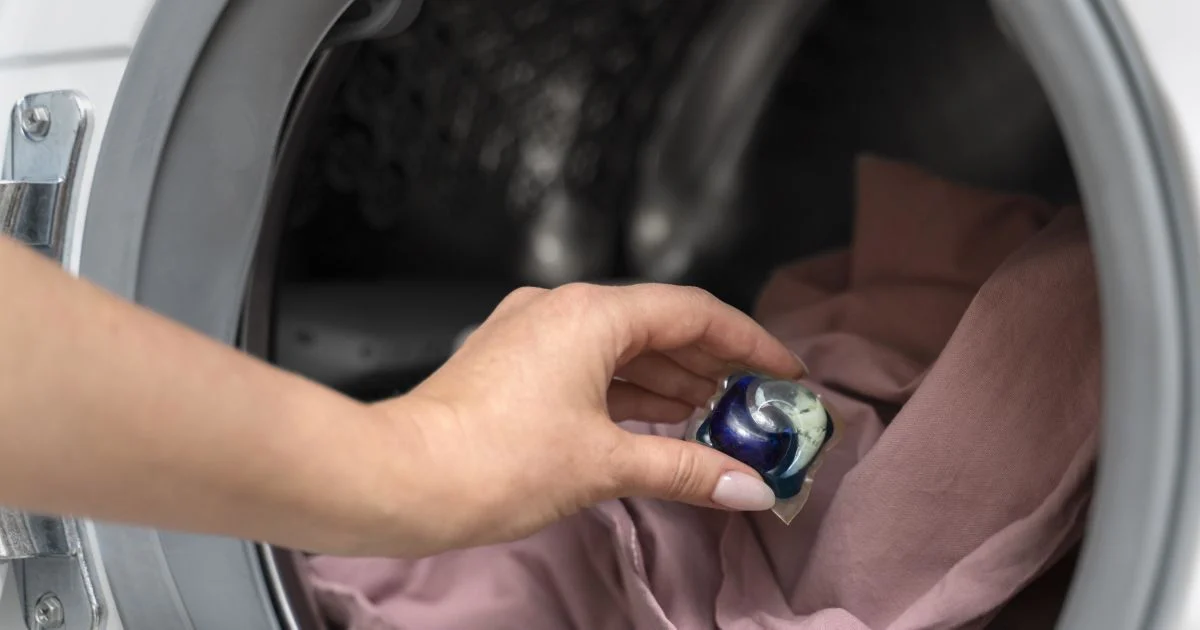
Washing / © Freepik
The washing machine has finished its cycle, the t-shirt appears clean but has a pungent smell or a white mark on the fabric. In such a situation, an additional portion of powder or gel will not enhance cleanliness: if there is too much detergent, the machine may not have enough time to rinse it out completely. Refer to the dosage on the packaging for your load, rather than the urge to “add a bit just in case.”
How to Tell If You’re Using Too Much Detergent
The first signs are not just marks on clothing. A slippery residue may appear inside the drum or dispenser drawer, and the washing machine itself might start to smell musty. These indicators mean that detergent residues are accumulating on surfaces and within the system, instead of being washed away with the water.
Similar symptoms are often mistaken as evidence of insufficient detergent. In reality, you should first check the dosage and the condition of the appliance itself.
How Much Washing Detergent to Use
The precise amount is not determined “by eye” but according to the instructions on the packaging and recommendations for your specific machine. Consider at least three factors:
-
load size;
-
how soiled the clothes are;
-
the type of washing machine and detergent.
A small load does not require a dose calculated for a full drum (a full measuring scoop). Likewise, heavily soiled items do not justify automatically adding twice the amount. First, check the markings on the packaging, the selected cycle, and the permissible load level.
If the machine has an HE marking, use a compatible low-foaming detergent and follow its instructions. Excessive foam can lead to additional rinse cycles, and residues will still settle on the fabric and washing machine parts.
What to Change in the Next Cycle
Measure the detergent using a measuring scale or cap, rather than adding it approximately. Start with the dose indicated by the manufacturer for your laundry volume and level of soiling. If white residue remains after washing, do not increase the amount of powder – check if the drum is loaded correctly and if the detergent is suitable for this machine.
After the cycle is complete, do not leave wet clothes inside for too long. A humid environment and detergent residues can intensify a musty odor, so it’s advisable to leave the door slightly ajar between washes if the model’s manual permits.
When the Cause Might Not Be the Dosage
If the odor persists after adjusting the dosage, inspect the rubber door seal, drum, and detergent dispenser. Water, lint, and residue can accumulate in these areas. Regular cleaning should follow the manufacturer’s instructions, as not all models are compatible with the same maintenance products.
It is also important to remove laundry promptly after a cycle. If cleaning does not help, and the smell resembles sewage, the issue might be with the drain or connection. In such cases, do not attempt to disassemble the machine yourself – contact a service specialist.
Comments Sort: New Old Popular Send