

In June 2026, an international team of researchers revealed sensational findings from an analysis of a rock from the Pacific Ocean floor, inside which unique radioactive isotopes from an ancient neutron star merger were discovered.
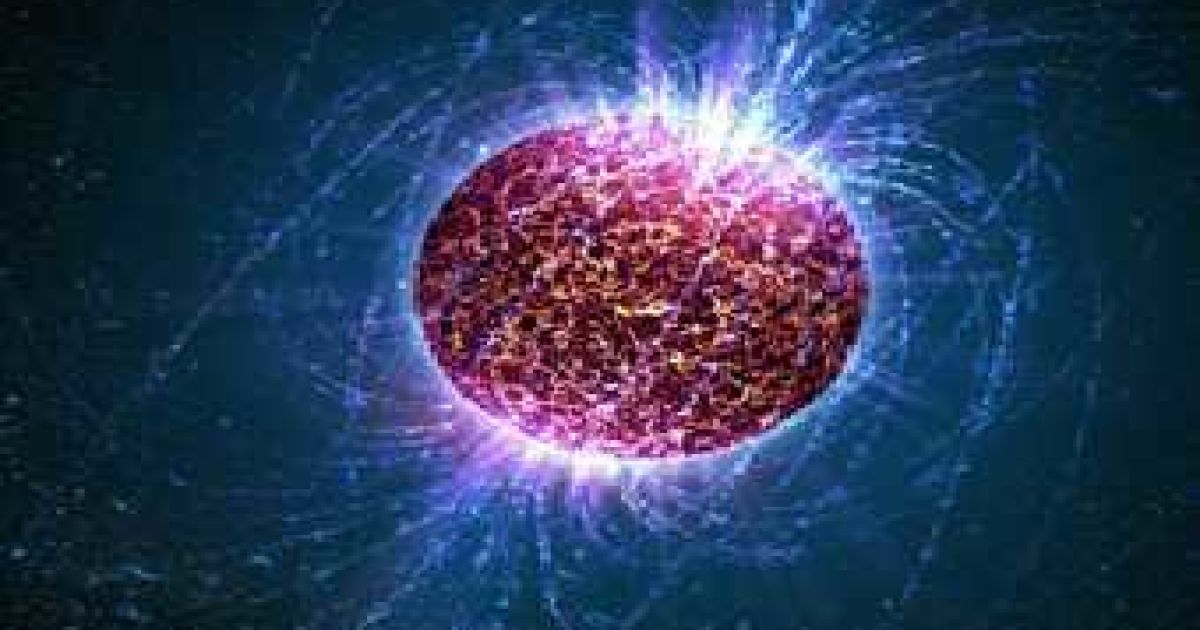
The merger of neutron stars culminates in a massive explosion, creating heavy elements like plutonium
Approximately 100 million years ago, a catastrophic collision of two massive neutron stars occurred in space, triggering a large-scale release of heavy elements. Subsequently, these radioactive fragments, in the form of cosmic dust, traveled an immense distance and slowly settled on the surface of our planet and the ocean floor.
Universe Today reports on this remarkable discovery.
Researchers managed to find nearly 300 atoms of radioactive plutonium within a small piece of ferromanganese rock, retrieved from the depths of the Pacific Ocean back in 1976.
Chemical Analysis and Rock Research
To determine the precise age of the cosmic fragments, scientists drilled 3 cores into the discovered rock and conducted complex X-ray tomography. Since the Earth’s crust grows extremely slowly, each such sample, up to 3 centimeters in size, spanned over 10 million years of geological formation.
“The absence of curium-247, another radioisotope formed during the explosion, indicates that this cosmic event occurred a very long time ago. However, no more than 1 billion years have passed since then, otherwise, detecting plutonium-244 would have been absolutely impossible,” explained Dr. Michael Hotchkiss.
Element Creation and Future Missions
Approximately 50% of the heaviest elements in the universe are formed precisely during colossal events like neutron star mergers. This complex physical process is accompanied by the instantaneous synthesis of thorium, uranium, and various transuranic chemical elements.
The plutonium-244 detected in the rock has been continuously and uniformly falling onto Earth for the past 100 million years. The research team now plans to search for other similar samples of ancient crust and places great hope on studying lunar soil during future space missions.
As a reminder, a NASA probe photographed the trace of an ancient catastrophe. A bizarre object in a distant corner of the Solar System turned out to be a unique asteroid that acquired its “peanut” shape as a result of an extremely powerful destructive impact.
Comments Sort by: New Old Popular Submit