

The danger from a lightning strike can persist even when there are few external signs of injury. New research has revealed the extent of damage to the heart.
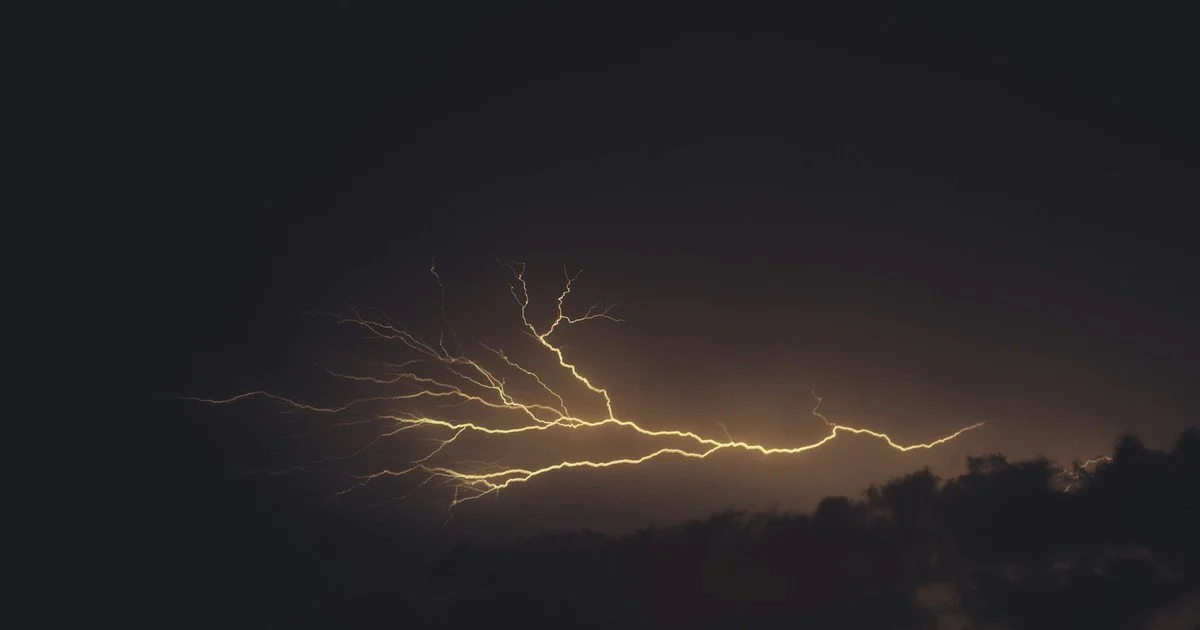
Lightning / © unsplash.com
A lightning strike can cause hidden heart damage even in cases where individuals experience no alarming symptoms immediately after the incident. This conclusion was reached by Polish researchers who analyzed the aftermath of the 2019 Giewont tragedy. According to their findings, lightning is capable of affecting not only the skin but also the heart muscle.
This was reported by the publication Egeszseg Kalauz.
The study was conducted by specialists from the medical faculty of Jagiellonian University in Krakow, the Tatra Volunteer Mountain Rescue Service (TOPR), and an international group of scientists.
The impetus for this work was the tragedy in August 2019 on Mount Giewont in Poland. During a thunderstorm, lightning struck a metal cross at the summit where hundreds of tourists were present. Over 130 people were injured in the incident, and four died. Some individuals suffered a direct lightning strike, while others sustained injuries from side flashes or ground currents.
During the research, scientists worked in three areas. One team reconstructed the positions of individuals at the moment of the lightning strike, another analyzed the spread of electrical current among the victims, and a third examined medical records, laboratory test results, and examinations. This helped correlate the mechanism of injury with the nature of the trauma sustained.
A key indicator was the level of troponin, a protein that signifies damage to the heart muscle. When myocardial cells are injured, its concentration in the blood increases, making this marker widely used to assess heart health.
The analysis revealed that elevated troponin levels were found in 45.8% of the victims. The highest values were recorded in individuals who experienced a direct lightning strike or were affected by side flashes. These specific injury mechanisms, according to statistical analysis, were associated with the highest risk of heart muscle damage.
Researchers explain that the heart’s function relies on its own electrical system. The powerful electrical discharge of lightning can disrupt this system, potentially leading to severe arrhythmias or even cardiac arrest.
However, the danger is not limited to the cardiovascular system. According to the scientists, lightning can damage the respiratory center in the brainstem, posing a risk of respiratory arrest. This underscores the critical importance of prompt first aid and rapid medical intervention following such an incident.
The study’s authors also compared troponin levels after lightning strikes with other situations involving significant cardiac stress. They found that the levels were higher than those observed after elective cardioversion, a procedure to restore heart rhythm using an electrical impulse. However, the values were similar to those seen after multiple defibrillator applications or extremely intense physical exertion, such as marathon running. The researchers emphasize that during a lightning strike, a massive amount of energy passes through the body in mere milliseconds.
Dangerous consequences may not manifest immediately. Even if a person feels well, the heart muscle may already be damaged. Therefore, after a lightning strike, it is recommended to perform an electrocardiogram, check troponin levels, and, if necessary, keep the patient under medical observation.
In case of a lightning strike, emergency services should be called immediately. The researchers remind us that the common belief about a dangerous “residual charge” in the victim is a myth. It is safe to provide assistance to the person. If they are not breathing or have no pulse, cardiopulmonary resuscitation should be initiated immediately until medical help arrives.
In addition to acute consequences, long-term complications are also possible. Weeks or months after the incident, victims may experience headaches, impaired memory and concentration, nerve pain or numbness, and hearing and vision problems. Psychological disorders, including anxiety or post-traumatic stress disorder, are also not excluded.
The study’s authors believe that these findings will help physicians more quickly identify patients at high risk of hidden heart damage, order necessary investigations, and determine the need for ongoing medical surveillance.
We remind you that chronic sleep deprivation and constant work-related fatigue damage the body and provoke serious illnesses. Experts have explained how balancing work and personal time ensures healthy aging.
Comments Sort: New Old Popular Send