

Fat tends to accumulate on the abdomen, particularly in women. Even with regular gym attendance and proper nutrition, achieving visible abs requires a lengthy journey.
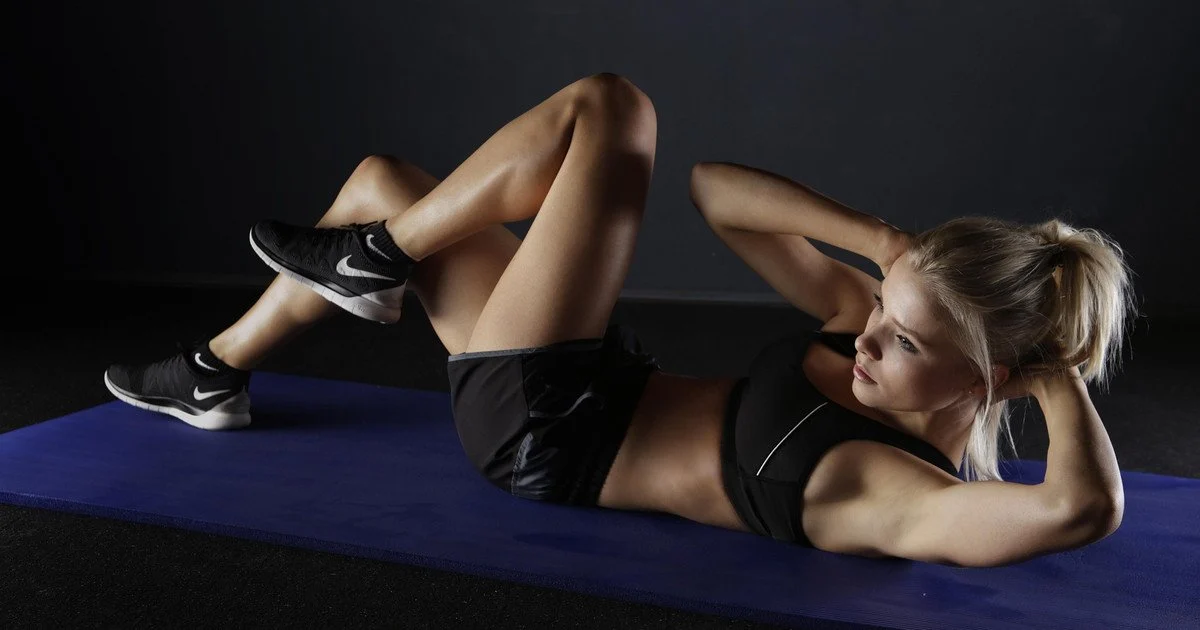
The quality of exercises is more important than the number of repetitions / © Pixabay
After 30-35 years of age, women’s physiology undergoes changes – this is a well-established fact in neurophysiology and endocrinology. The main issue is that many women continue to apply old logic to a body that is now operating under different rules. Exercise or diet alone do not always help, hence a comprehensive approach is necessary.
In an exclusive comment to TSN, fitness trainer Daria Litvin explained how to achieve a flat stomach, why it becomes increasingly difficult after 30, and why an intensive training regimen no longer works.
Why Classic Ab Exercises Don’t Yield Results
“For many women, abs mean ‘six-pack on the stomach.’ However, a strong core involves the transverse abdominal muscle, which is far from classic crunches. The transverse abdominal muscle is the deepest among all abdominal muscles. When women/girls have a protruding belly, they try to reduce it through training. This is not effective,” says Daria.
The abdomen is not an isolated organ but an entire torso section that connects several systems in different planes:
-
attaches muscles to the ribs and spine
-
supports internal organs
-
provides stabilization function – linking the upper and lower body
The transverse abdominal muscle engages during all strength exercises, notes the trainer.
“A strong core is the foundation of everything. When we have a strong core, we can stabilize our body during any exercise. This is crucial in unilateral movements, as well as in lunges and squats. That is, the better we stabilize the core, the more effectively we can perform an exercise and control our body overall,” added Daria.
Straight crunches and traditional ab exercises increase general tension, primarily activate superficial muscles, and do not restore coordination within the core. Consequently, many women find themselves in a paradoxical situation: their abs are strong, body fat percentage is low, yet their stomach still appears heavy, dense, or tense.

Abdominal flatness cannot depend solely on diet or exercise, let alone one factor / © Pixabay
Daria recommends a series of effective exercises that can be performed at home.
Dead Bug
Execution technique: Lie on your back with your lower back pressed to the floor and your pelvis slightly tucked. Keep your arms and legs raised (legs at a 90-degree angle) – lower one arm and the opposite leg as far as you can while maintaining your lower back pressed to the floor.
Exhale when lowering your arm and leg, inhale when returning to the starting position.
Repetitions: 8-10 repetitions per side
Bird Dog
Execution technique: Place your palms under your shoulders and your knees hip-width apart. Keep your abdomen engaged and simultaneously extend one arm and the opposite leg parallel to the floor (important! do not lift too high – do not arch your lower back or twist your pelvis) – hold for a few seconds and return to the starting position.
Exhale when extending your arm, inhale when returning.
Repetitions: 8-10 repetitions per side.
Plank
Execution technique: Support yourself on your elbows or palms – elbows or palms directly under your shoulders, body forming a straight line. Slightly tuck your pelvis, engage your abs and glutes, keep your back straight without arching your lower back. Do not lift your neck – look straight ahead. Breathe calmly without holding your breath.
Duration: Start with 20-40 seconds and gradually increase the holding time.
Stress as a Cause of Abdominal Fat
According to research published in the journal Psychosomatic Medicine, abdominal fat contains four times more receptors for cortisol, or stress hormones that cause obesity, than subcutaneous fat – the fat located just under the skin. This means that during intense stress, fat moves to the abdomen more quickly than to other areas of your body.
To reduce fatty tissue and enhance abdominal definition, it is important to maintain a moderate calorie deficit. Simultaneously, nutrition should remain balanced, providing sufficient protein, fats, carbohydrates, fiber, and a variety of foods.
Comments Sort: New Old Popular Send