

Russia is employing psychological terror reminiscent of World War II, launching jet drones in small groups to create continuous air raids and exhaust the population.
Олексій Гетьман
Contents
- The enemy is using tactics from World War II
- Attacks are aimed at exhausting the population
- How long can air raids last
Russia has altered its attack strategy, focusing on psychological pressure and creating tension among the populace. Air raids in Kyiv and other cities could persist for weeks without reprieve.
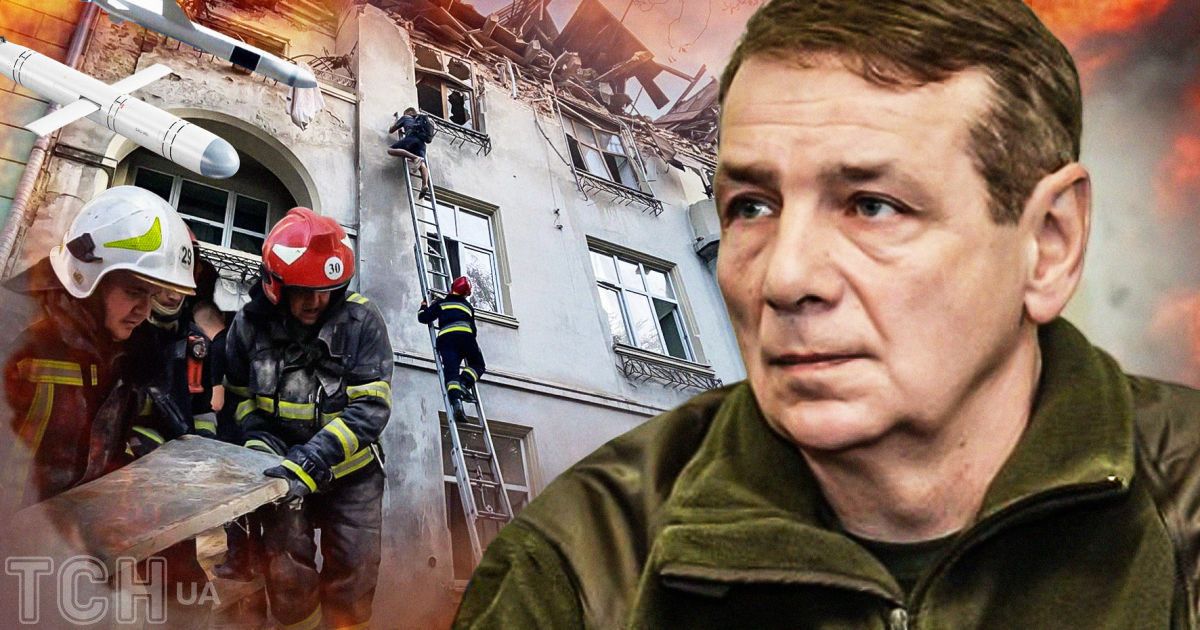
This was stated in a comment to UNIAN by Oleksiy Hetman, a veteran of the Russian-Ukrainian war and a retired major.
“We observe that the attacks have primarily involved jet drones, with almost no use of missiles. They produce a large quantity of drones – hundreds per day, so such attacks may become more frequent,” he said.
According to the expert, Russians are attempting to keep Kyiv on edge by launching a small number of jet drones, mainly because they are harder to counter and are faster.
The enemy is using tactics from World War II
“This tactic is well-known; it was practiced during other wars. During World War II, the Nazis employed this method, constantly bombarding positions and cities, not pursuing a military objective other than to keep people in suspense. There was even a schedule: at a certain time, a person had to step out, load the cannon, fire, and then go rest. Such a tactic is designed to maintain constant tension on the other side, ensuring something is always incoming, something is always happening. There’s nothing new in this strategy. Therefore, it’s entirely plausible that Russians will utilize an old tactic, not a new one,” Hetman explained.
Attacks are aimed at exhausting the population
In the expert’s opinion, Russians likely aim to adopt an attack model where drones continuously infiltrate.
“That is, a small number, but constantly. We are not yet clearly prepared for this, but we will find a way out of this situation,” he noted.
Hetman recalled that on August 27th alone, there were 13 air raids in Kyiv, causing massive traffic jams and paralyzing metro operations.
“It’s not just about fraying nerves; it made it impossible to travel from one place to another, for people to commute, to deliver goods to stores, and so on. That is their objective,” he stated.
The veteran also mentioned that similar prolonged attacks could continue, as Russians possess a sufficient number of drones, and launching them is not a significant problem, not requiring complex launch systems.
How long can air raids last
“Whether we like it or not, it’s quite possible that the air raid alert could be constant. Not just 13 times, it could be continuous. It could last for weeks, until the end of the year, without ending. That is, they could do this so there’s no lull, launching two or three drones every two or three hours. To avoid a lull, so that a drone flies in, whether it’s shot down or not, the alert remains active,” he said.
As Hetman pointed out, air raid alerts halt the operations of many enterprises in Kyiv and suspend metro traffic in open areas.
“So, it’s entirely possible they will attempt this; we are hypothesizing. The probability is high; they don’t need to do anything extra, just set a schedule for launching their drones so that, say, one or two fly every half hour. In terms of quantity, this would be no more than what they launch during massive attacks, even less if you calculate it,” he explained.
Furthermore, the expert added that to counter such attacks, we would need to utilize not only ground-based but also aerial air defense assets, meaning aircraft and helicopters.
“Ground groups are positioned directly on the ground; they will struggle without air support. This means they need to be intercepted at least tens of kilometers from Kyiv to prevent them from falling here,” Oleksiy Hetman concluded.
Incidentally, yesterday, August 27th, Kyiv and the surrounding region experienced 13 air raid alerts with explosions from the start of the day; today, as of 2:40 PM, there have been 9.
Related topics
Air raid alert Russia Drones UAV Comments Sort: New Old Popular Submit