

The presence of prisoners from Africa who do not comprehend Ukrainian, a van laden with flowers for female service members, and a vehicle that vanished overnight only to reappear weeks later—these are not cinematic plotlines but the daily realities of front-line transportation. These accounts were shared by soldiers themselves in anticipation of Independence Day, following the receipt of a new fleet of vehicles from the MK Foundation charity.
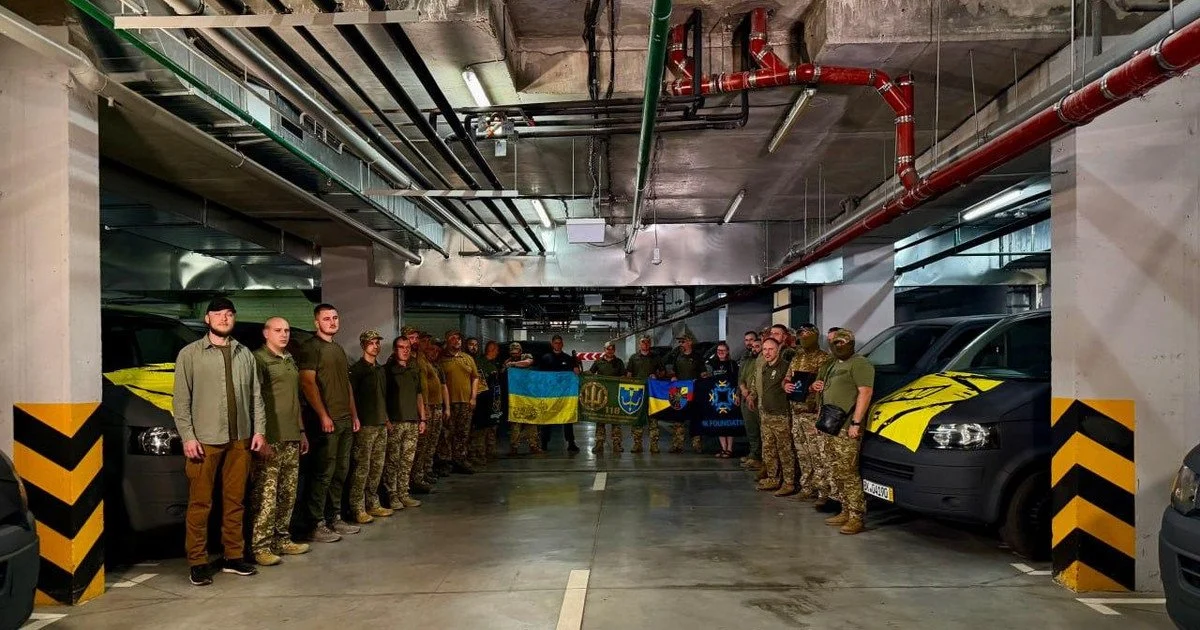
The foundation, established by Ukrainian entrepreneur Maksym Kryppa, has now provided the Ukrainian Defense Forces with 20 Volkswagen Transporter vehicles. These vehicles have been allocated to units engaged in combat, reconnaissance, logistics, medical, and other operations across various fronts. Among the recipients are the 17th Tank Brigade, the 119th Brigade, the 130th and 140th Separate Reconnaissance Battalions, the 91st Separate Okhtyrka Support Brigade, the 27th National Guard Regiment, the 110th Mechanized Brigade, the 118th and 260th Territorial Defense Brigades, the 420th Separate Unmanned Systems Battalion, the 309th Separate EW Regiment, the 301st Anti-Aircraft Missile Brigade, the 38th Joint Training Center, the 31st Brigade named after Major General Oleksandr Radievsky, the Military Medical Clinical Center, and others.
For soldiers at the front, a vehicle is an indispensable asset. It transports personnel, ammunition, equipment, drones, fuel, and provisions, aids in the evacuation of the wounded, and delivers materiel directly to positions. Andriy, a service member from the ground robotic systems company “Triglav” of the 110th Separate Mechanized Brigade, succinctly describes the transport: “A vehicle is an integral part of accomplishing our missions. Essentially, it is our consumable material.”
His unit operates with ground robotic systems, and vehicles are crucial for their timely delivery to positions. “We have very interesting robots: some that shoot, some that mine, some that clear mines. They are all different, but the main thing is that they do good work,” the soldier explains, adding that the unit strives to prioritize personnel safety by utilizing equipment where it can substitute for a fighter.
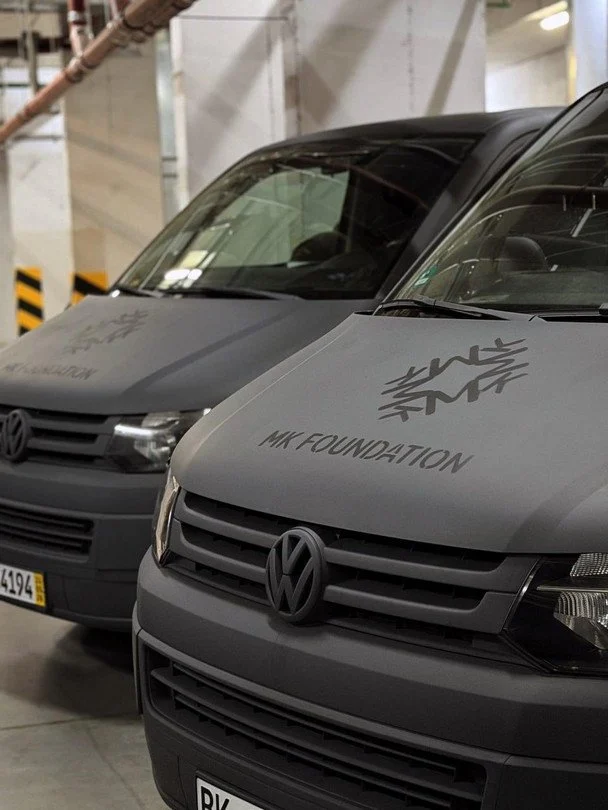
“We understand how quickly vehicles wear out and how critically important it is to constantly replenish this resource. That is precisely why we continue to supply vehicles to the military and will do so as long as our defenders require them,” stated Maksym Kryppa, the founder of MK Foundation.
Vehicles on the front lines transport far more than just ammunition, fuel, or gear. Over his years of service, Volodya from the 130th Separate Reconnaissance Battalion has witnessed considerably more unusual “cargo” being transported in vehicles. “The strangest thing that could be transported in a vehicle was prisoners. And not ethnic Russians, but individuals from Zimbabwe and many other third-world countries. They knew neither Ukrainian nor English—they were simply thrown in there and explained what needed to be done using gestures,” the soldier recounts.
Meanwhile, a service member from the 260th Separate Territorial Defense Brigade of the Armed Forces of Ukraine “Khortytsia,” with the callsign “Fartovy” (Lucky), recalls a completely different scenario: on one occasion, a front-line bus carried a full load of flowers. “You know how men like to pay attention to women and bring them flowers. We had a situation where a full bus of flowers was being transported. It was Spring Festival, and we have women in our brigade,” he explains.
In total, since the beginning of the full-scale invasion, the MK Foundation has supplied the Ukrainian military with over 2,100 vehicles, and the foundation’s total aid has exceeded 1.02 billion UAH.
The 20 Volkswagen Transporters, delivered just before Independence Day, are now en route to fulfill their duties where transportation can be critically vital to the operations of Ukraine’s defenders.
Comments Sort: New Old Popular Submit