

Majority of Ukrainians Ready to Update Their Data for Elections – OPORA Research 12.06.2026 18:05 Ukrinform The majority of Ukrainians are willing to update their details to participate in elections, while citizens identify digital services as the most convenient method for updating information.
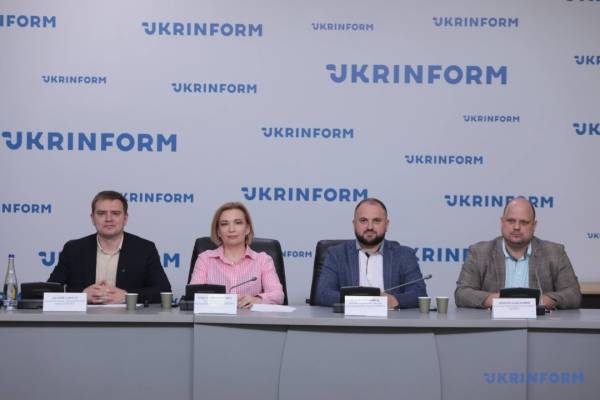
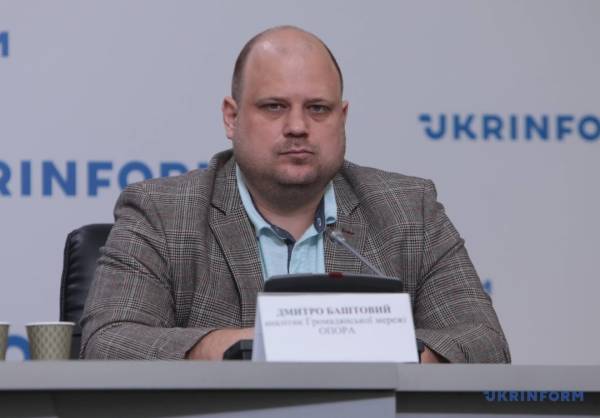
This was announced by Dmytro Bashtovy, an analyst at the OPORA Civil Network, during a press conference titled “New Geography of the Ukrainian Voter and Migration Trends: Analysis of the State Register of Voters’ Data Comparability with Unofficial Migration,” held at Ukrinform.
“Based on a nationwide survey, we can state that 25% of the adult population in Ukraine has experience of relocating for a long-term or indefinite period. We did not include urgent moves in this figure. Regarding the period of the latest relocation, 72% of citizens indicated that it occurred after February 24, 2022, and 70% of them confirmed that it was a forced departure. These numbers confirm that the full-scale invasion was the primary driver of shock migration, causing people to move en masse,” he said.
According to Bashtovy, the geography of movement is predominantly concentrated on inter-regional relocations: 61% of respondents moved to an adjacent or non-adjacent region. He added that it was important to determine this figure as it places a burden on the accounting system of the State Register of Voters. The analyst also noted that 13% have experience of moving abroad and subsequently returning to Ukraine.
“We additionally identified that among all adult residents of Ukraine who left for abroad and returned specifically after the full-scale invasion, the figure is 5%,” he remarked.
The nationwide survey also aimed to ascertain the discrepancy between registration and actual place of residence, as the analyst explained that the voter’s system and polling station are determined according to current procedures based on their registration address, unless the voter voluntarily changes their electoral address. It was found that about a third – approximately 29% of those surveyed – live outside their registered address.
“This significantly impacts the overall voter registration system and the determination of their polling location. In other words, these voters are currently not residing at the location where they are scheduled to vote. In terms of age groups, the 18–35 demographic is the most mobile and resides outside their registered address,” he stated.
The expert added that 81% of relocated individuals consider their current place of residence to be their primary one.

Furthermore, the study revealed that the majority of Ukrainians are prepared to update their information for election participation. Specifically, 58% of respondents are willing to update their details in the State Register of Voters independently, and this figure rises to 70% if they receive a proactive notification or appeal from the state. Meanwhile, citizens identify digital services as the most convenient method for updating information: 77% of respondents chose the “Diia” app. However, awareness of electoral procedures remains limited – only 55% of citizens reported knowing about the existence of the State Register of Voters.

The national poll was conducted using the Computer-Assisted Telephone Interviewing (CATI) method, based on random digit dialing (RDD), from March 21 to April 19, 2026, and included 2003 adult respondents. Data collection was carried out by the FAMA agency.
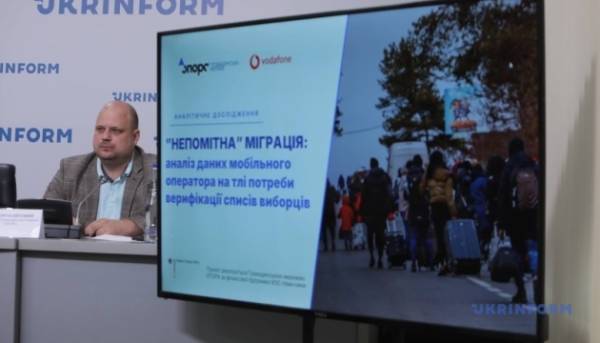
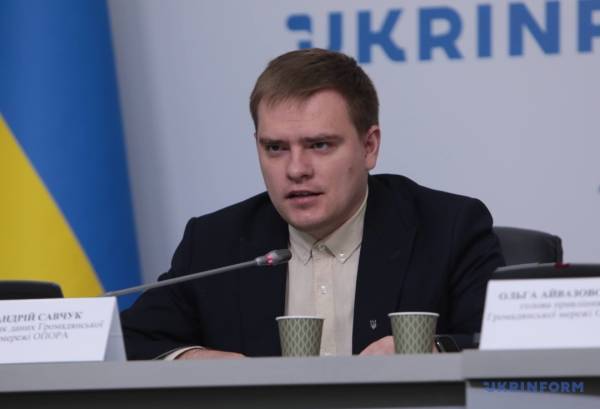
In turn, Andriy Savchuk, a data analyst at the OPORA Civil Network, presented the findings of the study “Invisible’ Migration: Analysis of Mobile Operator Data Amidst the Need for Voter List Verification.” The study concluded that the state may significantly underestimate the scale of migration. According to the results, approximately 1.2 million people have changed their region of residence, another 640,000 have changed their district of residence within their region, and about 5.2 million citizens are currently abroad.
The study’s authors also recorded 482 interregional migration routes. The largest population growth is observed in Kyiv and the Kyiv region, as well as in Lviv, Zakarpattia, Ivano-Frankivsk, and Chernivtsi regions. Conversely, the most significant population decline was recorded in Mykolaiv, Zaporizhzhia, and Kharkiv regions. The results indicated that at least half of interregional migration today is not reflected in voter lists through official residency registration mechanisms.
Concurrently, in the context of surveying Ukrainians in Poland, Germany, and the Czech Republic, Bashtovy noted that the Ukrainian diaspora is interested in political processes in Ukraine – 74% of those surveyed expressed readiness to participate in future elections. However, only 16% are registered at a consulate, which would ensure their inclusion in the voter list according to the current procedure.
The survey results showed that a significant portion of respondents are not familiar with the procedures for voting abroad and changing their electoral address. Specifically, 49% of Ukrainians abroad are willing to update their electoral address independently, and after additional information from the state, this figure rises to 61%. At the same time, over 80% use the “Diia” app, which most selected as the most convenient way to update their electoral address.
The analyst added that 75% of the surveyed Ukrainians relocated to Poland, the Czech Republic, or Germany after the full-scale invasion. Meanwhile, 38% of respondents assess the probability of return as “more likely to return and very likely to return,” while 48% consider it “more unlikely to return and very unlikely to return.” Another 14% of respondents were undecided about returning to Ukraine.
The online survey of Ukrainians in three European countries was conducted from April 17 to May 2, 2026. A total of 1500 individuals were surveyed – 500 respondents in each country. Data collection was managed by Rating Group.
Summarizing the research, Olga Aivazovska, Chairperson of the Board of the OPORA Civil Network, stated that the experts focused on two aspects – the scale of migration, which is actually larger than indicated in official registers, and the extent to which participation in the country’s political life is a focus for displaced citizens, particularly during the full-scale war.

“Our main goal is to conduct cross-verification of different types of data in advance to genuinely understand not only the scale of the problem but also how it can be addressed, because there is still time for this. However, closer to the actual electoral process, it will become impossible. Therefore, we urge both government bodies and the government itself, as well as the Central Election Commission, to act proactively, because without creative approaches, unfortunately, there will be no effective results,” she said.
As Ukrinform reported, the number of people in Ukraine who believe that elections should only be held after a final peace agreement and the complete end of the war has risen to 69%. In December 2025, this figure was 59%.
Photo: Hennadiy Minchenko/Ukrinform
More of our photos can be purchased here.
Survey Elections OPORA research
Джерело: www.ukrinform.ua